
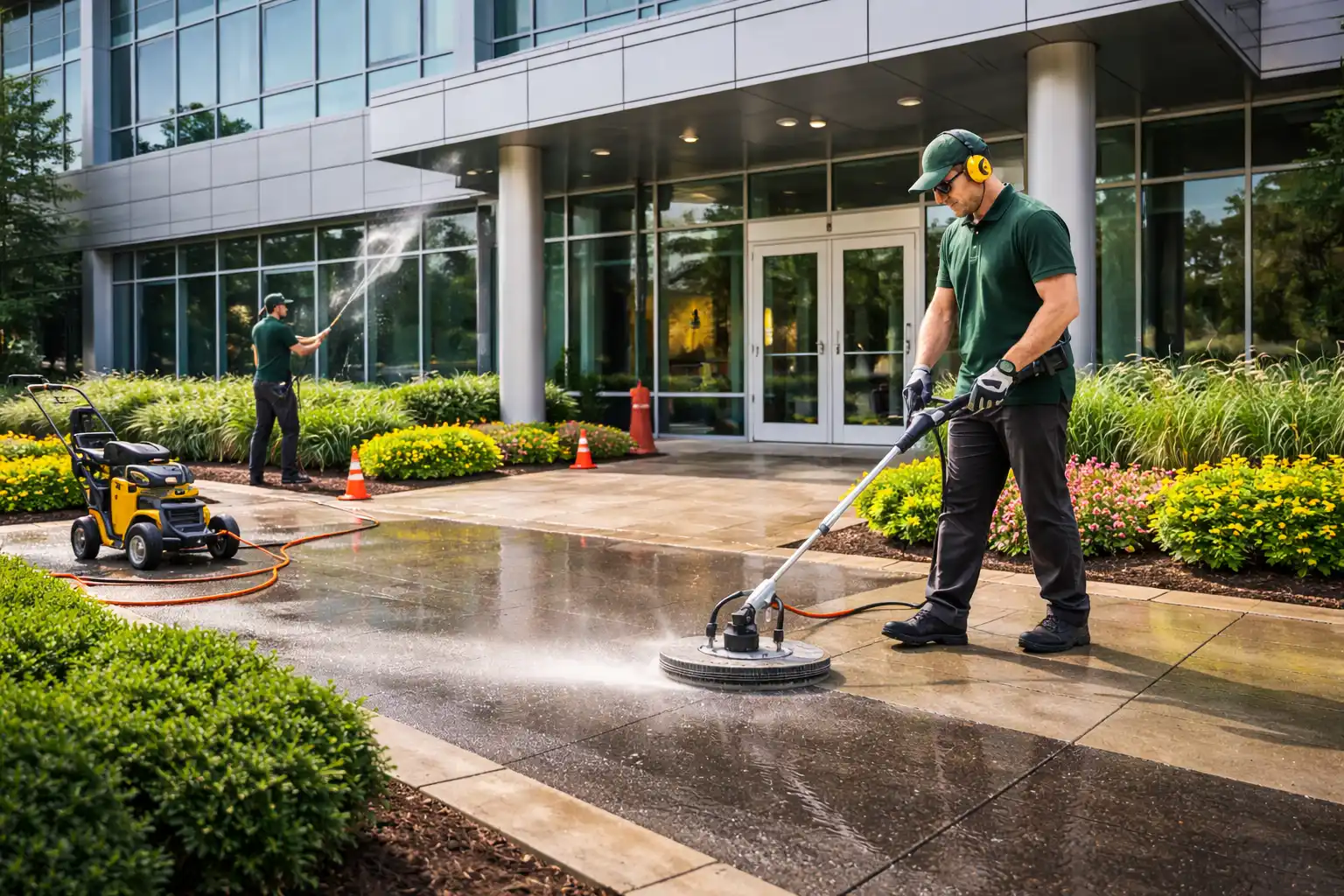
Your driveway works hard. Cars drip oil on it. Rain and mud splash across it. Leaves pile up on it. Over time, all that dirt and grime build up and make your driveway look old and worn out. So how often should you pressure wash it?
For most homes, the answer is once or twice a year. But the exact schedule depends on your driveway’s material, your local weather, and how much traffic it gets. At The Lawn Ranger 985, we’ve cleaned enough driveways across Tangipahoa Parish to know exactly what works. This guide breaks it all down so you know exactly when to clean.
If you live in Ponchatoula, Hammond, or anywhere else in the parish, keep reading. We’ll also show you how our team’s residential pressure washing services can help.
What Is a Driveway?
A driveway is the paved area outside your home where you park your car. It connects your garage or parking spot to the street.
Driveways are usually made from one of three materials:
- Concrete — the most common and durable option
- Asphalt — softer and more affordable, but needs gentler care
- Pavers or brick — adds curb appeal but requires more upkeep
Since your driveway sits outside all year, it takes a beating from rain, sun, dirt, and vehicle traffic. That’s exactly why regular exterior cleaning matters — it keeps the surface clean and protects it from long-term damage.
The Basic Cleaning Schedule
Most driveways need a good pressure wash once a year. This clears out a full season’s worth of dirt, oil and grease stains and mould. If your driveway sees heavy use or sits in a humid area, bump that up to twice a year. Spring and fall are the best times to do it.
Here’s why that timing works so well:
- Spring cleaning removes the dirt, salt, and grime left behind by winter weather.
- Fall cleaning clears away leaves and debris before they sit on your driveway all winter and cause stains.
How Your Driveway Material Changes the Schedule
Not all driveways are the same. The material your driveway is made of plays a big role in how often it needs cleaning.
Concrete Driveways
Concrete is tough. It can usually go a full year between washes. But if you park more than one car, or your driveway sits on a busy street, wash it twice a year instead. Regular concrete cleaning stops oil stains and road dust from soaking in.
Asphalt Driveways
Asphalt is softer than concrete. Too much pressure can crack it or wear down the surface. Even so, asphalt cleaning still benefits from a wash twice a year, spring and fall. Just make sure whoever cleans it uses lower pressure and the right nozzle.
Paver and Brick Driveways
Pavers and brick add kerb appeal, but they need more upkeep. Sand between the pavers washes away over time, and weeds can grow in the gaps. Clean these driveways once a year, and plan for a deeper clean with re-sanding every two to three years.
Factors That Push You Toward More Frequent Cleaning
Some driveways need extra attention no matter what they’re made of. Here’s what to watch for.
Heavy Vehicle or Foot Traffic
The more your driveway gets used, the faster dirt and stains build up. If you have multiple cars, or if it doubles as a play area for kids, clean it more often.
Nearby Trees, Sap, and Leaf Debris
Trees drop sap, leaves, and pollen. This debris sticks to your driveway and can leave permanent stains if it sits too long. If your driveway is under trees, plan to clean it twice a year.
Humid or Rainy Climates
Moisture is the enemy here. Humid weather speeds up mould and mildew, along with algae buildup. In Louisiana’s climate, this means your driveway may need more frequent washing than in drier states.
Oil Stains and Visible Buildup
Oil stains from cars get worse the longer they sit. If you spot a stain, don’t wait for your next scheduled wash. Clean it as soon as you notice it to stop it from setting in permanently.
Whether Your Driveway Is Sealed
Sealing protects your driveway from stains and moisture, but it doesn’t replace the need for pressure washing. A sealed driveway is often easier to clean since dirt and grime don’t soak into the surface as deeply. If your driveway was sealed recently, you can likely stick to your regular schedule. If it’s never been sealed, or the sealant has worn off, plan on cleaning it a bit more often.
Signs Your Driveway Is Overdue
Not sure if it’s time? Look for these warning signs:
- Stains that won’t come off with a hose
- Green or black patches from moss or algae
- A slippery feel, especially after rain
- Dull, faded color compared to when it was new
- Cracks or rough patches forming on the surface
If you notice two or more of these, it’s time to schedule a surface cleaning appointment.
Can You Pressure Wash Too Often?
Yes. Washing too often, or using too much pressure, can actually damage your driveway. This is especially true for asphalt and older concrete.
Over-washing can
- Wear down the surface and cause pitting
- Strip away protective sealant
- Create small cracks that grow bigger over time
The fix is simple: match the pressure and frequency to your driveway’s material. A trained professional using proper high-pressure cleaning techniques knows exactly how much pressure each surface can handle.
Best Time of Year to Pressure Wash a Driveway
Timing matters as much as frequency. Here’s when to plan your cleanings:
Spring
Removes winter grime and prepares your driveway for warmer months. This is also the best time to spot early cracks or stains left behind by snow and ice, so you can fix small problems before they get worse.
Fall
Clears leaves and debris before they sit under any winter moisture and stain the surface. Cleaning now also removes sap and pollen buildup from summer, so your driveway starts winter fresh instead of trapping grime under snow and ice.
Try to clean in the morning. This gives the surface plenty of time to dry before evening, which keeps it safer to walk and drive on.
FAQs
Can you pressure wash a driveway too much?
Yes, washing too often or with too much pressure can crack asphalt or strip concrete sealant over time.
Is power washing a driveway worth it?
Yes, it removes damaging oil, mould, and grime early, which boosts curb appeal and saves money on repairs later.
How much does it cost to pressure wash a 2,000 sq ft driveway?
Costs vary by material and condition, but The Lawn Ranger 985 offers free quotes for an accurate price.
Which month is best for power washing?
Spring and fall work best, clearing winter grime and pre-winter debris.
How do I know if my driveway needs pressure washing?
Watch for stubborn stains, mould, a slippery feel, or a dull, faded look on the surface.
Your Driveway’s Next Wash Starts Here
Your driveway’s ideal cleaning schedule comes down to three things: its material, your local climate, and how much traffic it gets. For most homes, once or twice a year keeps it looking sharp and prevents long-term damage.
Ready for a spotless driveway? Call The Lawn Ranger 985 today for your free pressure washing quote.